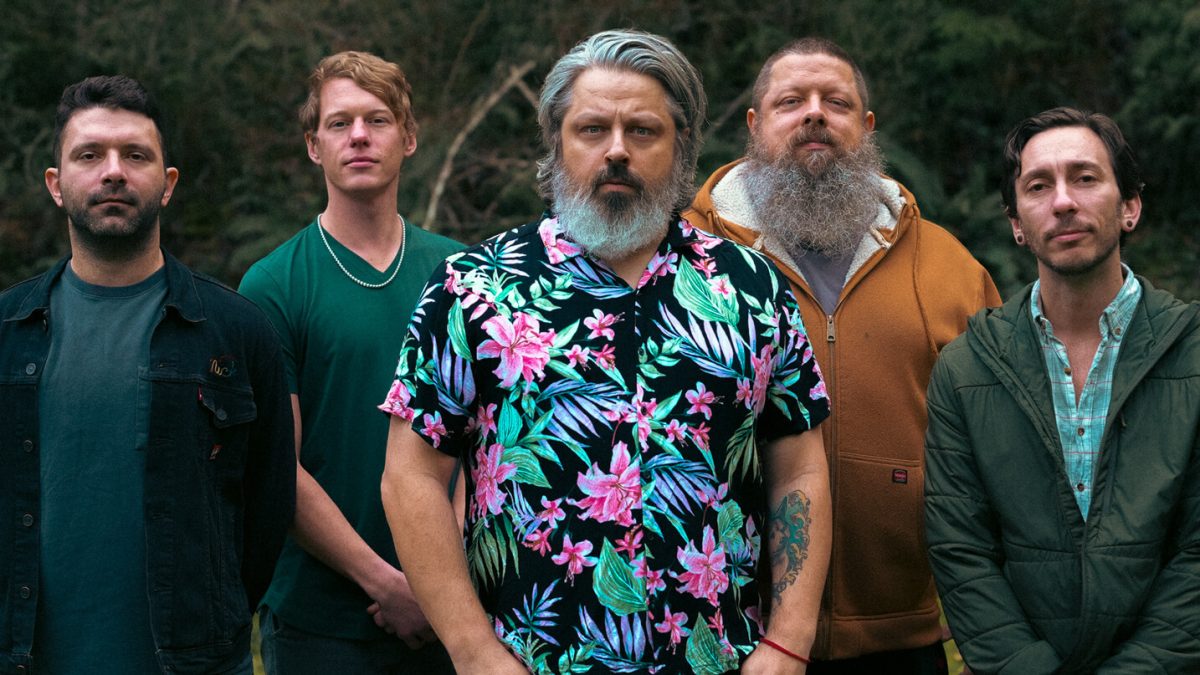
RadioUTD’s Idoreyin Eyobio speaks with Texas-raised singer-songwriter Thomas Csorba for a conversation on his deeply personal new album, Tender Country. Stream his latest release, out now via Turtlebox Records, here.
Idoreyin Eyobio (IE): Tender Country feels like a pivot from chasing identity and ambition to documenting everyday life. Was there a specific moment for you, like a conversation, a morning, or a mundane ritual that made you realize that this was the album you really wanted to make?
Thomas Csorba (TC): Yeah, I don’t think it was anything specific, just kind of like a something that’s kind of come with time, you know. When I was 17-18 years old and making records, a lot of my, you know, identity was wrapped in, like, how to be cool as most 17-18-year-olds, and I think having a family, and you know, all of these things that take up kind of my day to day have kind of shifted my perspective to something outside of me and my image, and more about, you know, how to serve, how to serve my family, and how to document kind of what life is like. Yeah, and I just feel like I don’t have the time or the energy to kind of try to keep up, and you know, try to be cool. So, another big part of making this record is kind of the shift in mentality that, you know, each record I put out is, you know, kind of another brick in the wall of my catalog and my legacy of what I’ll leave behind, and not just to music listeners, but to my kids, maybe one day grandkids, and so I really want to be proud and excited about the stuff that I’m leaving behind, and that’s kind of been the litmus test that’s gone into, does this line work, does the song work, and what’s the overall theme of this, yeah.
IE: It’s, yeah, it’s like leaving a legacy, almost right. And on a topic similar to that, do you think a domestic life gets undervalued as subject matter in country music? Because I feel like oftentimes modern country music, like Morgan Wallen, talks about city life and being in that sphere versus domestic roots.
TC: Yeah, I think a lot of the country music that I love and grew up on, the Merle Haggard and early Willie Nelson, and you know, Kris Kristofferson, and all these songwriters that I’ve loved, they seemed to have, like, a respect for the mundane and the willingness to talk about, and I think that’s why it resonated with so many people, is because country music is kind of for the people. I think modern country music, you mentioned Morgan Wallen, and these guys, like Gavin Adcock and Charlie Crockett, you know that music is fun, but it seems to be kind of this battle of who’s more country than who, and that seems like a fleeting kind of endeavor, and so the record title, Tender Country, I think, kind of flips it on its head and says no, there should be some tender and thoughtful sentiment, maybe to the way we approach and think about the history of country music, and think about its, you know, future, and so, yeah, I think maybe it gets overlooked a little bit in modern day, certainly it’s harder to sell and market, I think that a lot of people listen to music in order to escape and in order to feel something that they don’t feel on a regular basis, or explore another world that they don’t get an experience in their day to day.
IE: Yeah.
TC: I’ve kind of embraced this idea of the fact that I get to be kind of a mirror for, you know, the people who are living day to day, you know, quote unquote mundane, you know, lives, and instead of letting them feel like that’s mundane and something to escape, this record kind of treats those moments as something to be embraced and something to be recognized as special and sacred and magical.
IE: So it’s like almost like a return to form, almost.
TC: Yeah, almost. Yeah, I think that there are traces of that. And certainly, like, there’s a bunch of country music, you know, from the 70s that I love, you know, “Little Ole Wine Drinker, Me,” and, like, you know, close all the honky tonks, like these amazing old country songs that are, you know, party and bar songs, or whatever.
IE: Yeah.
TC: But you hear a song by Merle Haggard, like “Holding Things Together,” it’s one of my favorite Merle Haggard songs. That’s just like a devastating kind of family song and fatherhood song, and or Tammy Wynette’s “D-I-V-O-R-C-E,” you know. It’s just like these kind of songs seem to like embrace something that a lot of people are feeling, yeah, rather than being that escape.
IE: Because fatherhood is like a whole different journey, and I don’t think a lot of popular music really focuses on that, almost like transformation, right?
TC: Yeah, certainly transformation, and not to get too far into this, but we live in a culture that maybe doesn’t embrace the importance of the role of a good dad, you know, and right now that’s everything to me, and so why not make a record that embraces and kind of double clicks into what that life looks like and what that journey looks like.
IE: So, on the topic of that, you’re very connected with your music, and you write about personal issues. Is there anything that you’ve written that you’re like, this is too personal to put out?
TC: That’s a great question. I don’t, I don’t think so. You know, I think the manner in which I write is pretty like it’s based on personal stuff, but I try to leave it open-ended enough to where people can insert their own stories, right, and claim it as theirs. This right now, this interview, this context, this is where people can kind of find out about the story behind the songs, and so on and so forth, but when you listen to a three and a half minute song, people, people are selfish in a way, and I do this, you know, I don’t mean that as a dig. Yeah, people want to make it about themselves and see themselves in the song, and so no, I don’t think it’s personal. I think the experience that leads up to what these songs become, that’s personal, you know. There’s a song on the record called “He Would Have Loved This,” that is about my grandfather, and how much I miss him, especially watching my boys grow up. And you hear the song, and a million people are going to insert their story, you know, into that song, but at a live show I get to talk about my grandfather, right? And so the live show is really the place that I’m able to provide some of that context as to how I ended up at that song, but the way most people are streaming and digesting this music is through streaming, is through, you know, social media and whatnot, and so yeah, I think it doesn’t feel personal to me, because it ends up being everybody’s song, you know, yeah.
IE: Because I guess when the moment you release a song it’s not really yours anymore, right?
TC: No, and I think even the moment the song was made, you know, and recorded, you know, even if I’m sitting there in a room full of friends or by the fire, and somebody’s like, “Tell me what you’re working on,” you know, the moment I play that song, it becomes ours, and I think that’s part of the reason why I’m trying to put up music as often as I can, is because the song, I guess, gets its full life once somebody can hear it and digest it and make it theirs.
IE: Yeah, I think that’s what I really like about music, is that for like centuries, even beyond centuries, we all come together to listen to music, and your music is really adding to the conversation.
TC: Yeah, yeah, I hope that’s the case, even on a small scale, you know. I think it’s important, and you know, whether or not 100 people or 100,000 people listen to this record, I think it still holds value. You know, and we obviously, in the music business side of things, assign value to things based on, you know, how many people listen to it, or how much your royalty check is based on however much streaming entities are paying at the moment, you know, all those things, and that’s all noise, that’s all just part of the business side of it, whereas the art itself, you know, reaches its full form once somebody joins the conversation.
IE: Yes. So, correct me if I’m wrong. You self-produced this album, right?
TC: Yeah, I did.
IE: So, what was it like being on the producer’s side of it versus just playing the music? Does it change how you really hear the album?
TC: Yeah, it’s funny, claiming producer credit on this album, but the reason why I was able to do that was because of the great musicians that I made this album with. The way I like to make records is pretty old school with the whole band in the room at the same time, and I’m really grateful and blessed to be surrounded by phenomenal musicians, and so whenever I can, you know, sit down in the room while everybody’s ready to record, I play in the song and they’re taking notes and you know making charts for the song, and then we talk about kind of, oh, maybe this solo should be twice as long, or let’s shorten that intro, or whatever. That’s a really collaborative effort. So, while on one hand I claim that I produced this record, on the other hand, it’s all of the musicians who put their hands on it, and I just got to steer the ship a little bit, and that just comes with time and practice and being in the studio after making multiple records, but then further, you know, being really heavy on the editing front, on the front end, so the songs were in a very good place that I felt good, that okay, you know, Matt Tedder on guitar is going to be able to make this thing really special, and so as I was editing songs and figuring out the track listing, I was thinking about who was playing on the record and where they would be able to fit into the puzzle.
IE: Yeah, that makes sense. And when I was researching you, I read that the Houston Chronicle called you the next great Texas songwriter, right? And does that feel like a gift or weight on you, or is that a mix of both?
TC: It’s a mix of both. I mean, I feel unworthy to be in the category of, you know, Guy Clark and Kris Kristofferson and Townes Van Zandt, but at the same time, you know, on the press front, it’s a gift that somebody would listen to my songs, especially somebody who is a music critic, right, and listens to that much music would hear my work and put it in that category in his own mind, and this goes back to the audience thing, as you know, maybe that music struck him in a way, you know, that older music, these legends of the Texas songwriting Mount Rushmore, maybe those songs struck him in a way that kind of was echoed in the way I was writing, and certainly you know the way I write is shaped by those writers, right, and so you know we’re kind of using the same vocabulary and the same language, and the same images, you know, as my heroes, and so yeah, to be kind of put, you know, very acutely into that lineage is an honor, for sure, but also it’s like getting a good day job that pays you well, in that you want to earn your keep and make sure you’re honoring that position.
IE: Exactly. Yeah.
TC: And continuing to work hard to write good music.
IE: How did your influences really affect your songwriting? On top of that.
TC: Yeah, I mean those guys that I mentioned were everything, and then outside of just musical influences, my older brother, who introduced me to that music as a teenager, was really pivotal in me understanding the love and the art of storytelling and songwriting, and so there have been certain people like my brother Will, and like Tyler Richards, and like other artists who have come alongside and encouraged me as people that have inspired me and encouraged me, you know, to stay on this path and to continue working hard.
IE: Yeah, I also wanted to ask, how do you balance being a musician that tours and obviously being a man who values his family?
TC: That’s the big question, and the thing that I kind of poke at in that first song I released off this record, called “The Big Time,” is this question of how do you make those two things meet, and it’s really tricky. I mean, I’m learning the power of saying no, you know, and my wife and I are constantly evolving and learning our priorities, but I also understand that in order to bring home the bacon and to, you know, make this work and continue putting out records, there’s a financial aspect to me needing to, you know, be on the road and go play some shows. So I’m certainly playing less shows than I used to, but by no means am I done touring. I’m just being a little bit more calculated than I was when I was 17-18 years old, just saying yes to anything that came across my desk.
IE: No, yeah, priorities change when you start a family. So, correct me if I’m wrong again. Turtlebox Records was created by one of your lifelong friends, right?
TC: Yeah, I grew up with the founders. There are four original founders, and they’re a few years older, but very close family friends, and I’ve gotten to know those guys really well since I was just a little kid.
IE: How does it feel being under this label rather than almost like a disconnected label that doesn’t really know who you are, not just as an artist, but as a person?
TC: Yeah, it’s a gift. There’s a lot of trust there, and it’s something that a lot of artists don’t get to experience, you know. I know that their goal is to share music with the world, and to be a part of people’s everyday lives, and they want every backyard, every, you know, hunting lease, every surfing community, all of these places, they just want to be the vehicle to share music with the world, and so it’s a really good feeling to just get to be a small piece of that pie, and you know it’s comforting, and there’s a lot of trust there to know that the priorities are right here.
IE: Yeah, that makes sense. It just really helps when you share the values of who you’re working with.
TC: Yeah, totally. There’s a lot of context that’s just understood. There’s history, and they know where I’m headed and know what I value. Yeah, versus having to explain it from scratch, almost.
IE: Exactly, exactly. What do you hope Tender Country does for the label and your career?
TC: Yeah, I think you know, as far as for the label is concerned, I hope that, you know, this is the first record that’s coming out on Turtlebox Records, and so I hope that we’re kind of creating a playing field for artists and brands, maybe to do something interesting and different in a pretty rinse and repeat kind of music business. This is certainly unconventional, and that really excites me. There, it’s the wild west out there. There’s a lot of ways to put out music, and I’m really grateful to get to be, you know, the first of hopefully many that will come out on Turtlebox Records. And then, for me, my career, you know, like I mentioned earlier, I don’t want to downplay this record, because I’m so proud of it. But it’s certainly a stepping stone into my next record, and a stepping stone into the next stage of my career, and a stepping stone into, you know, this catalog that I’m building, and that kind of long-term mindset, I think, has really served me well, and will continue to serve me well as I go down this path.
IE: And speaking about your journey, this is going to be my last question for right now. You mentioned that you want to have an artist-for-life mentality, looking for something more sustainable rather than a breakout moment. What does success actually look like for you right now in your season of life?
TC: Yeah, that’s a great question. You know, my goal is to create a vehicle — a small business, you know, because I am a small business owner. I want to create a small little business that allows me to continue putting out records every couple years that isn’t tied to this idea that I have to play 200 shows a year, like some of my friends, and more power to them, it’s just not my vision, and so, yeah, that sustainability is the goal, is finding that balance, and I always will be struggling with, you know, an event with my family, and then a tour date that I’ve had on the books for a while, and how to make those two things reconcile, and yeah, I think the goal here, and the hope is that I can continue building a fan base that are the kind of people that pre-order the record and the kind of people that buy tickets in advance to a show and are there to hear what I have to say, and along for the whole journey.