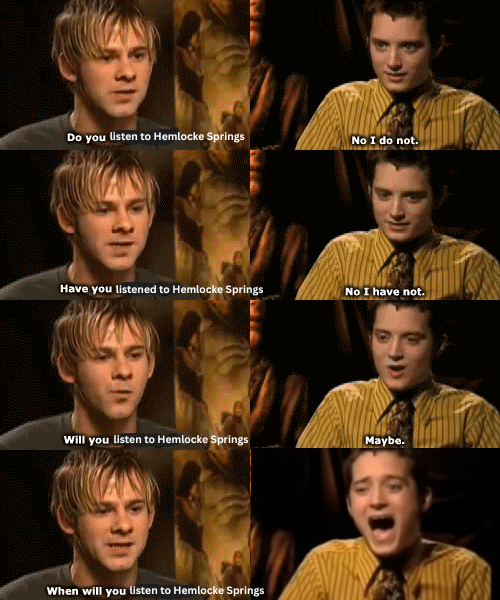
We’re months away from Hemlocke Springs’ mid-February first full-length album release, The Apple Tree Under the Sea, and I feel the need to grab everyone by the shoulders and ask them a simple question: What do you actually know about Hemlocke Springs?
If you listen to indie music—particularly indie music of the bedroom-dream-pop variety—odds are, you’ve encountered Hemlocke Springs before. In 2022, Hemlocke Springs (aka, Isimeme “Naomi” Udu) went viral for a TikTok she posted of her song “gimme all ur luv.” At the time, Udu was a master’s student at Dartmouth College, studying health informatics, taking her three hardest classes, and fending off post-COVID depression. For Udu, music had been a sort of low-pressure stress-release. Years before, a friend had introduced her to GarageBand, and eventually, she committed to LogicPro. It didn’t seem that she was expecting her video to blow up—music was a necessity for her at that time: a stress-relieving hobby she kept to herself, and little more.
In interviews, Udu frequently owns up to her shyness. “I’ve always been reticent about revealing that I sing and do Logic on the side,” she told Rolling Stone. She made the resolution to begin telling friends about her hobby—right around the time she released her first tracks on SoundCloud under the name Hemlocke Springs.
Udu had uploaded tracks in the past, but would be quick to delete them. After two demos (“Jacob” and “gimme all ur luv”) received instantaneous praise, however, she kept them up—and went on to post a now-viral TikTok promoting the latter single. To date, the video has garnered over 1.1M views.
As her following grew, Udu would eventually work up the courage to release her debut EP, going…going…GONE!, in September of 2023. The EP’s second track, “girlfriend,” quickly surpassed “gimme all ur luv”’s popularity, amassing over 54 million plays on Spotify. When looking at monthly listener metrics, however, Udu has under 460,000 monthly listeners. By indie music standards, it’s not small, but for an artist as outrageously gifted as Udu, I would argue that number is criminally low.
If you’ve managed to avoid Udu’s music these past three years, there’s something I need you to understand: she is insanely talented. Her music is nostalgic 80s synth-pop with “benignly manic girl who layers tutus and twirls around in the rain until she can’t stand” energy. I’ve seen comparisons to Kate Bush; Prince; Marina and the Diamonds; Jack Stauber; Remi Wolf. They’re all valid, but simultaneously, they’re all not comprehensive enough. I would argue that Udu—while drawing from decades of musical inspiration—has created her own hyper-specific amalgam of sound.
High-level production value, rock-solid artist brand, and raspy yet vibrant vocals aside, Udu’s lyrics continue to surprise me with their whimsy and depth. Even when her lyrics are more stripped back, they’re a massive part of what makes Hemlocke’s songs pop—even if the production is so wonderfully in-your-face that they, at first listen, may take a sort of backseat.
The first time I listened to “girlfriend,” her most popular track to date, I’d initially thought her lyrics were simplistic, but the production was so good that I couldn’t complain. But then, we get to this verse:
You say I want to be your girlfriend
But do you want to be my man?
I’ll treat you like you are a carry-on
Like you’re my one and only fan
My kindness is of a false pretense
I’ve got the ego of a god
But if you take me in your arms, be confident
I’d commit a character fraud
There’s something weighty in the line “I’ve got the ego of a god,” particularly the way that it’s sung, that stood out to me immediately. It’s perfectly contrasted by the later (far more intense) bridge: “Secretly, I’m aiming for a rhythm that exceeds my expectations / Am I ever gonna get it? / Your girl is in the business so there’s little room for idle contemplation.” Udu isn’t afraid to lean into the “weirder” side of music production, from adding in gritty little half-screams in the background of tracks like “girlfriend” to playing with key and scale changes from measure to measure. In “pos,” she adds in a few raspberry (mouth farts, for the unaware) sounds—and it works. With tracks entirely written, performed, and often solely produced by her, Udu proves that she’s a powerhouse in the music industry, beyond even the bedroom pop genre. It would be insulting to pretend that she’s anything short of a triple threat.
Of course, there are people who will argue that she’s not the up-and-coming genius that she is. To them I ask, how many other artists can you name whose processes are so independent, who have also managed to garner even a fraction of the success that Udu has earned for herself over the past three years? From starting her music career as a much-needed stress-relief from classes, to now opening for Conan Gray and Chappell Roan in the same week, Udu is the next big pop girlie in the making, and she appears to be doing it all largely on her own terms.
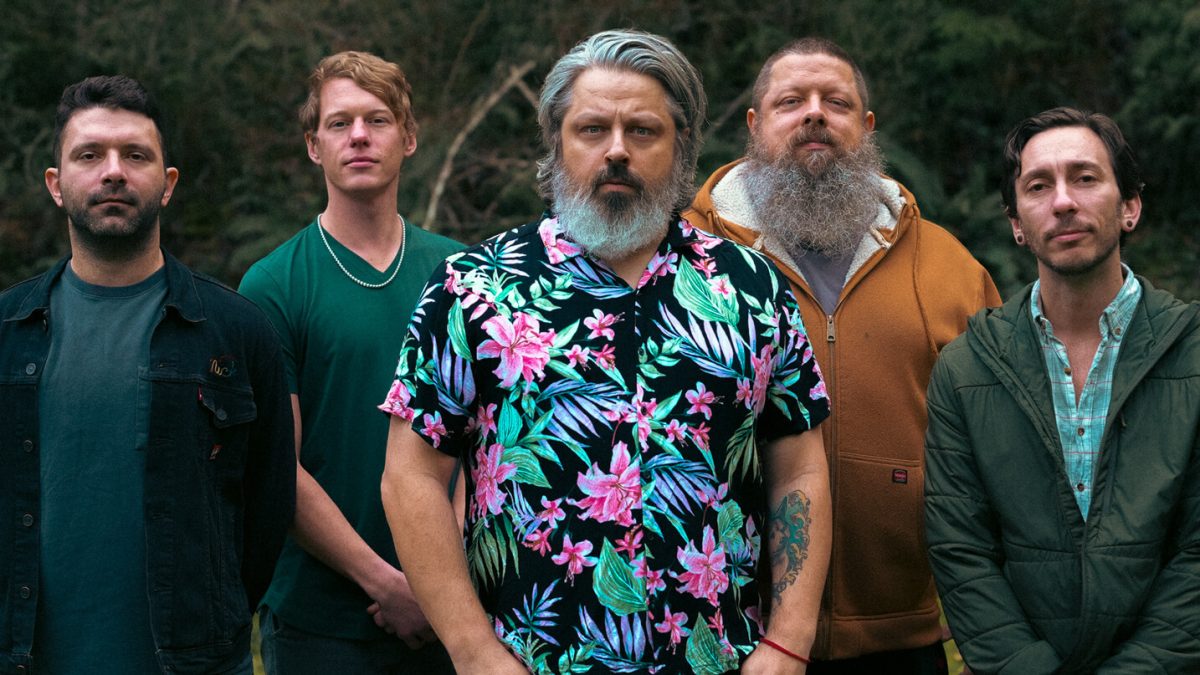
There’s a notable phenomenon with TikTok-viral musicians that their music, whether intentional or not, seems catered towards algorithm virality (video is obliterating the radio star). Adages of “the audience only knows the viral clip of the song” or “people showed up for just one song”—something I feel I noticed somewhat when I saw The Rare Occasions in 2022—are enough to make one wonder, do people even listen to music anymore? It doesn’t help that any time a remotely “good” artist comes out and goes viral, the industry plant allegations start. Sometimes, they’re valid (sorry, Sombr, they can’t save you), but other times, as with artists like Doechii and Chappell Roan, they’re largely unbased. Udu herself has been vocal about her industry plant accusations and hasn’t been afraid to defend herself against them. Honestly, I don’t think “the industry” could fathom planting someone this good.
Udu doesn’t just beat the industry plant allegations—she also completely upends the idea that TikTok viral artists only have one good song, or that artists who go viral on social media nowadays structure their songs entirely around one viral-worthy component, creating tracks that are only palatable for twenty seconds or so. Udu’s discography is nothing like this. Her debut EP, going…going…GONE!, doesn’t have a single skip-worthy track. While it contains her most viral songs, “girlfriend” and “gimme all ur luv,” my favorites are actually “heavun” and “pos” (between the mouth fart noises and the way her voice inflects on “rockin’ in my flimsy camisole,” how could I not be obsessed?)—although, each track is so strong, they win by a slim margin.
The two tracks that have been released from her upcoming album, The Apple Tree Under the Sea, are just as obsession-worthy. The first single Udu released, “the beginning of the end,” has a darker feel than her previous tracks, combining synths and a slower, sharper beat. The chorus is really where the genre-blending aspect comes in, initially cutting back on Udu’s usual vocal stacking and removing the harsher synths. It’s the perfect combination of pop and something sharper, grittier.
The EP’s second single, “head, shoulders, knees and ankles,” was released the week before Halloween, and it honestly couldn’t have come at a different time. It’s chaotic, energetic, and wonderfully off-putting, with lyrics that are perhaps technically nonsensical but manage to tell something of a story. “It’s definitely weird,” Udu said in a TikTok wherein she discussed an alliterative lyric change. “It could be because I’m ovulating too. (…) I’m gonna stop there.” These BTS videos and livestreams are a vital component of her brand, and I think part of what makes me love her as an artist.
With its frantic-feeling use of Udu’s usual mix of synths and steady percussion, “head, shoulders, knees and ankles” manages to be upbeat, punchy, and perfectly bizarre. The difference with “head, shoulders, knees and ankles” is how her typical synths are used—it feels more like an organ than a synth, generally upstaging the piano and little guitar in the background. The chorus builds, climbing slowly in pitch, escalating and escalating until it arrives at the sudden, climactical “and she was gone” line. At around the two-minute mark, the song transitions to an unexpected piano-dependent track, where the tone completely shifts to a chaotic Halloween amusement park ride theme to a short, enthralling piano ballad, which quickly incorporates harpsichord and synths before slowly fading out.
As someone who was a middle schooler in the bedroom/dream-pop trenches in the late 2010s (I remember thinking Clairo’s “Pretty Girl” was overrated pish; I was down bad for Chloe Moriondo pre-“kalmia kid”), I feel like I need to emphasise that no one is doing it quite like Hemlocke Springs. The music may draw clear inspiration from 80’s synth-pop, but it’s a sound unlike anything I’ve heard in years. To be a self-produced artist with such a clear vision and sound, yet also the proven capability to be versatile, is remarkable. You can draw comparisons to whoever you want—Jack Stauber, Dev Lemons, MUNA, Dora Jar—but I will argue till my dying breath that none of them are doing it quite like Udu.
I feel the need to point out that indie music is an outrageously white, largely cis-male genre. Despite the fact that Black culture and music have been the foundation of virtually all music we have today—blues, country, jazz, rock, R&B, even pop are all thanks to Black culture, and that’s a fact—too often, Black artists are siloed into a specific genre. Nina Simone famously rejected the label of jazz artist, instead calling herself a Black classical musician (which she was, you can fight me). In a similar vein, when FKA Twigs showed her face to the world, she went from being a “genre-less” avant-garde art pop artist to being lumped into R&B.
It’s 2025, and Black artists are still being forced out of musical spaces they belong in. Indie is certainly not exempt from this racism. In a 2024 interview with EUPHORIA, alt indie pop artist Rachel Chinouriri said, “You see my color before you hear my music,” during a discussion of the inaccurate genre pigeon-holing she faced due entirely to the color of her skin. Udu has also combatted racism during her music career, from disgusting trolls to an overall lack of diversity within the industry, the indie space in particular.
Udu’s success has helped to carve out a space for Black women to feel seen and welcome within the genre. Last month, when Vogue asked her what she wished she saw more of in indie pop, Udu responded, “(…) more POC, more Black girls, more women. I know people say that a lot, but I feel it so severely. I went in knowing the industry was going to be white-male-dominated, but it’s a different level.” Udu’s very presence within the industry marks her as a highly necessary changemaker.
Sometime after “girlfriend” was first released, a TikTok dubbed it the “awkward Black girl anthem.” Udu told People Magazine that she’s received “a lot of support, particularly from a lot of Black women saying, ‘This is tapping into my awkward high school phase,’ or saying, ‘Where were you during high school?’” Clearly, the listeners Udu has amassed thus far see the value in not just her music, but her as an artist.
So, why isn’t Udu more famous? Between the TikTok virality, the fact that she’s opened on some of the largest tours in front of what should be her perfect audience, and her impeccable discography/brand, it feels criminal that she’s not more well-known. She’s not a deep, deep underground artist by any means—but, however famous she is now, she deserves to be significantly more famous. An artist this talented should be a household name.
I think Hemlocke Springs is on the inevitable up and up. Going viral isn’t a requirement to top the charts, but Udu’s proven capability to work the algorithm doesn’t hurt her chances. The fact that she also just opened for two of the biggest live performers at the most recent VMAs bodes well for the growth of her listener base. It’s not her first time performing as an opener for a large artist, but I’m hoping that the release of her upcoming album creates a blow-up moment like what Chappell Roan experienced; I still remember being amazed that Chappell didn’t blow up after Olivia Rodrigo’s SOUR tour like I’d expected. It took a full-length album release and opening for the GUTS tour, plus a few iconic live performances, to skyrocket her to the level of fame she has now. I’m hoping that the release of Apple Tree Under the Sea gives Udu the boost she deserves. I wouldn’t be surprised if she makes her way onto the charts in the next few years, even if it takes a couple more tours as an opener or festivals to accomplish it.
In the meantime, I think it’s necessary to give Udu her flowers. She’s worked hard over these past three years to carve out a space for more than just herself within the indie music scene, but a space for all Black women. More than this, she’s also worked to develop a sound I feel is absolutely needed in the bedroom pop space. When you see an artist as original, as skilled, and as authentic as Udu putting in this much work, you just have to sit back and wait for the inevitable—and the highly deserved—to come about.
Keep your ears peeled for Hemlocke Springs’ upcoming February release. Trust me, you won’t want to miss it.